Editor's note: This article was first published in Polish on 26 October 2026 as Polskie siostry w Rwandzie. Najtrwalsza polska placówka.
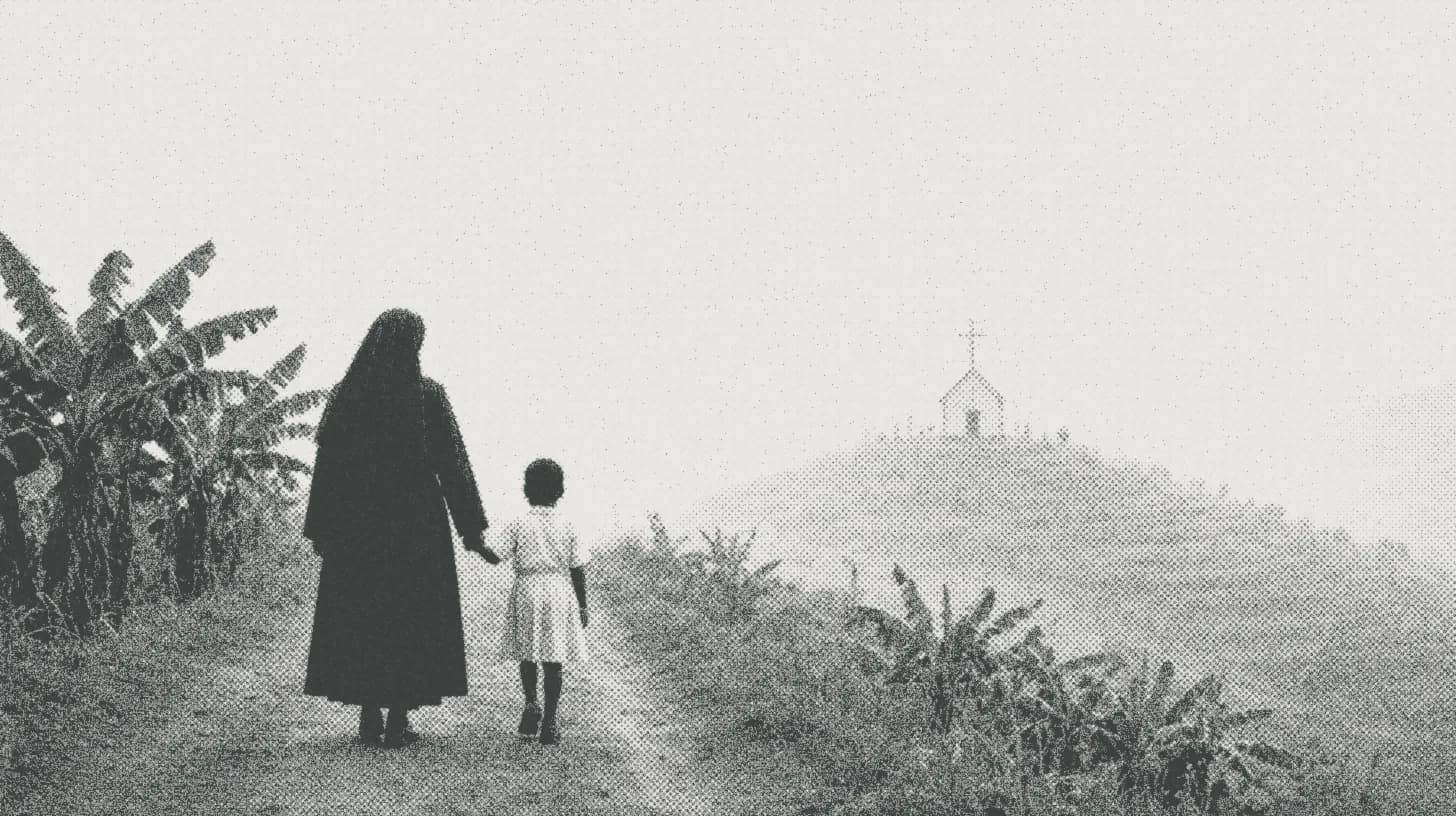
'I am needed more in Rwanda than in Europe,' Sister Rafaela Nałęcz told the Polish daily Rzeczpospolita in 2012. A Franciscan, she had worked at Laski, near Warsaw, and then at her congregation's houses in India and South Africa. In 2006 she arrived in Kibeho, in southern Rwanda, where blindness was seen as a curse and blind children were kept hidden at home. Two years later she opened a centre for blind children, which the Polish Ministry of Foreign Affairs describes as Rwanda's first school for the blind. Children often arrive only at the age of 12 or 13 because, as Vatican News reported, their families had long since given up on them.
Polish nuns have been working in Rwanda for almost half a century. The Pallottine Sisters run rural health centres, the Sisters of the Angels opened the country's first residential hospice, and the Franciscan Sisters Servants of the Cross teach blind children to read Braille. They have done more for Poland's presence in Rwanda than the Polish state has, though often with state money. The foreign ministry did not establish an embassy in Kigali until 2022, and when Paul Kagame praised Polish aid in 2024, he singled out the sisters' school in Kibeho.
How they came
It all began with a single invitation. In May 1972 the Bishop of Butare visited the Pallottine seminary in Ołtarzew, near Warsaw, and asked for priests. In June 1973 the first group of Polish Pallottine Fathers landed in Kigali, and it was they who brought in the sisters. The first three Pallottine Sisters, Rafała Raś, Irena Stachowiak and Victima Bischoff, arrived in the autumn of 1977. The Sisters of the Angels followed in 1984, and the Franciscans from Laski in 2006.
Catholic missionaries had been active in Rwanda since 1900, and the Church ran schools and hospitals across the country. The Polish sisters joined this network and filled its gaps: places with no doctor, no dentist, no hospice and no school for children whom nobody wanted to teach.
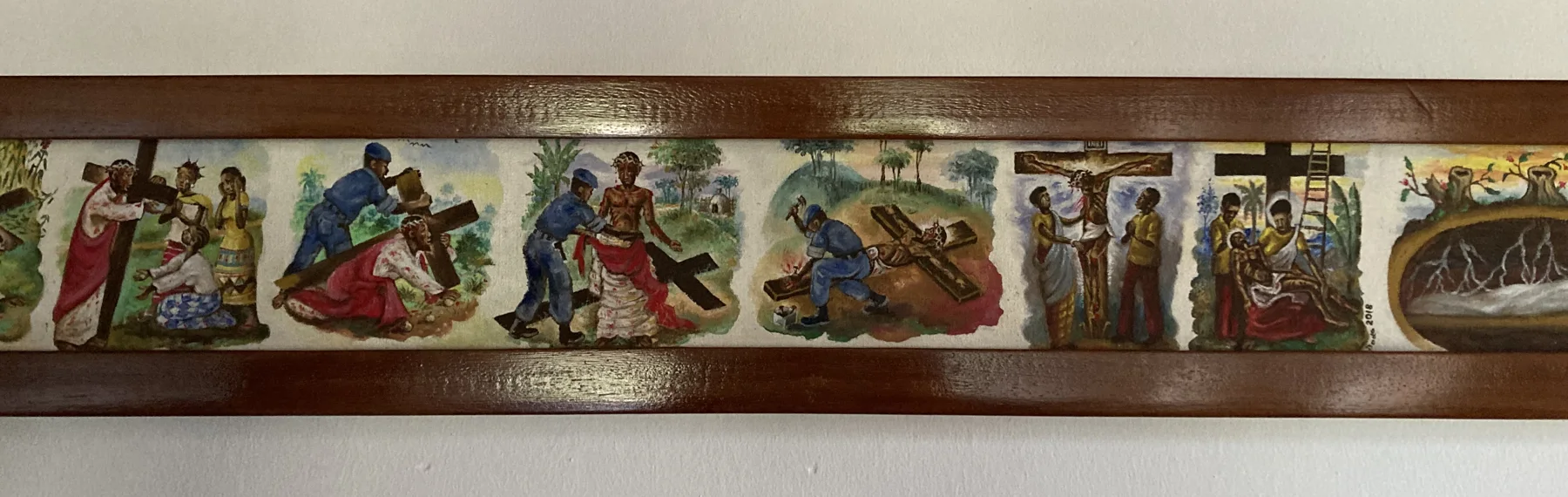
The Pallottines: 1994
The Pallottine Sisters settled in Masaka, outside Kigali, and in Ruhango, Gikondo and Kibeho, and in 1983 they opened a novitiate. According to 2019 figures, they ran six health centres in Rwanda and the Democratic Republic of the Congo.
The genocide found them at work. In April 1994 in Masaka, where the Pallottines ran an orphanage, Sister Rafała Raś told the armed attackers, as she later recounted to Rzeczpospolita in 2011: 'These are my children and I will not hand them over to you.' French troops evacuated the sisters, together with the children in their care, to Paris via Bangui. A Rwandan government commission remembers events differently. The orphanage was under the patronage of the wife of President Habyarimana, and in a 2007 report the commission accused the sisters of aiding the perpetrators, a charge the sisters denied.
The Pallottines from Ruhango tried to escape to Zaire (today the Democratic Republic of the Congo). Militiamen stopped them at a roadblock near Gisenyi; the group included six Tutsi, among them candidates for the order. According to the congregation, the sisters refused to be separated, and none of them was killed. In Gikondo, in Kigali, according to an account cited by the British journalist Linda Melvern, the Pallottines gave water to the wounded after the massacre in the church on 9 April, while Polish UN officers witnessed the killings and documented their aftermath.
The Sisters of the Angels: a hospice and a dentist
The Sisters of the Angels settled in the north of the country. For more than thirty years, until 2022, they ran a health centre for local people in Nyakinama. Since 1998 they have also run a sponsorship scheme for orphans growing up with foster families. In Kabuga, outside Kigali, their dental clinic operated for twelve years and drew patients from as far as Uganda and the DR Congo. According to the sisters, Rwanda had roughly one dentist per million people at the time.
The congregation's most important work is its hospice. It was led by Sister Barbara Pustułka, a nurse, who wrote in 2014 that 'until 2005 nobody in Rwanda had heard of a hospice'. Since 2013 the House of Hope in Kabuga has taken in patients with cancer and other incurable diseases; according to the Rwandan physician Christian Ntizimira, 85% of cancers in the country are diagnosed only at the terminal stage. The hospice has just twenty beds. In a 2019 report by Caritas Polska, its director, Sister Maria Piątek, said that the hardest part was knowing that goodbyes to patients come quickly.
The Franciscans: a school from Laski
Kibeho, where Sister Rafaela arrived, is the site of Marian apparitions recognised by the Church, and of two massacres. In 1994, according to Rwandan estimates, more than 25,000 Tutsi were killed in and around Kibeho, and in 1995 soldiers of the new army opened fire on a camp for displaced people. Here the Franciscans built a school for children who had none anywhere nearby.
Construction was paid for in full by the Polish foreign ministry through its Polish Aid programme. By 2019 Polish Aid had contributed a total of about PLN 5 million to building and running the centre, making it Poland's largest development project in Rwanda. Maria Kaczyńska, then Poland's First Lady, became its patron, and the foreign minister, Radosław Sikorski, attended its opening in 2009. Kagame visited the school in 2013, and President Andrzej Duda followed in 2024.
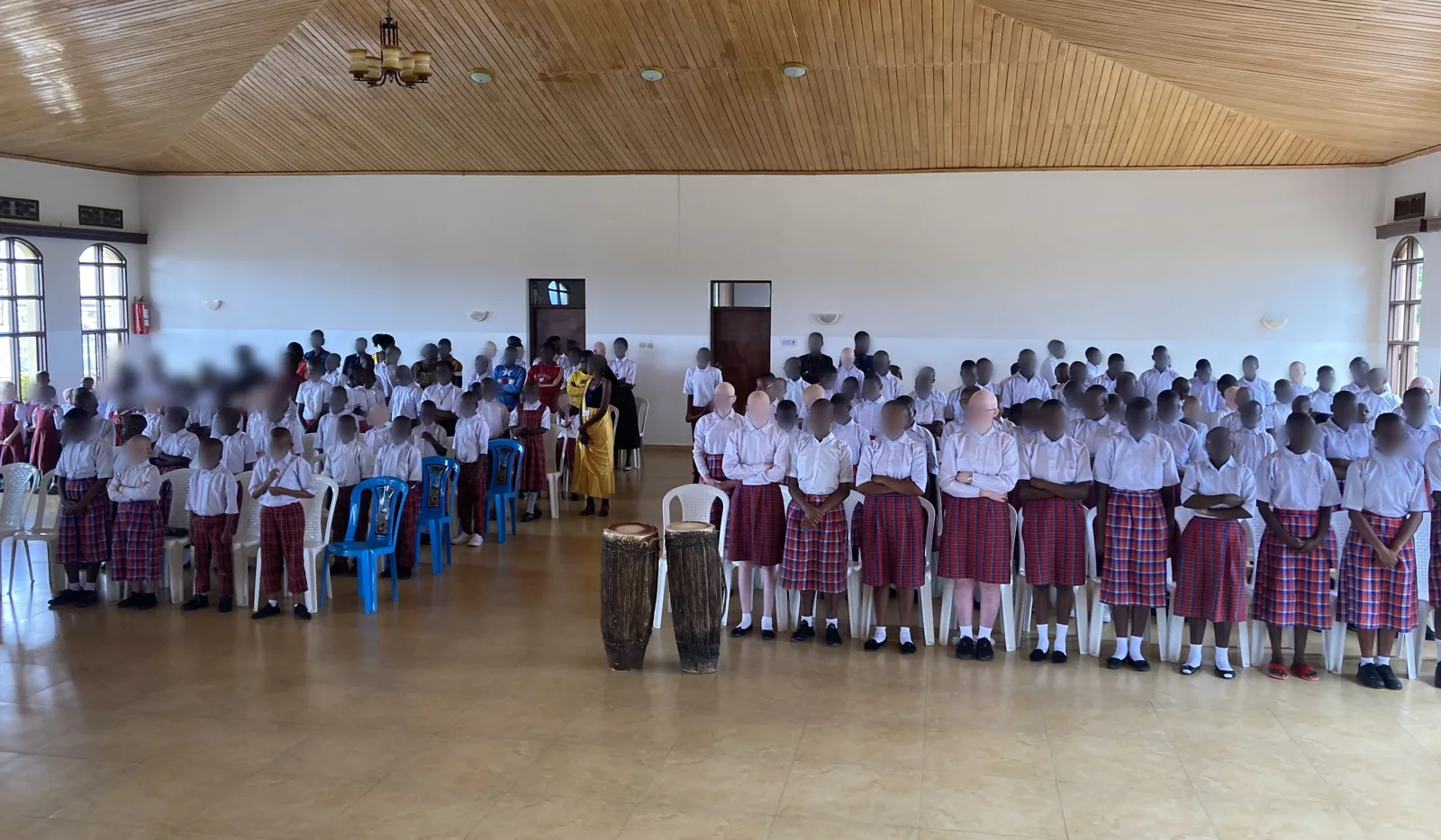
According to Vatican News, 185 children were studying there in 2024, among them children with albinism. In neighbouring Tanzania and Burundi, the organisation Under the Same Sun has recorded more than a hundred killings of people with albinism linked to the trade in body parts. Sister Pia told of a woman who brought two such children to the school and said that only her third child, the one who had stayed at home, was Rwandan.
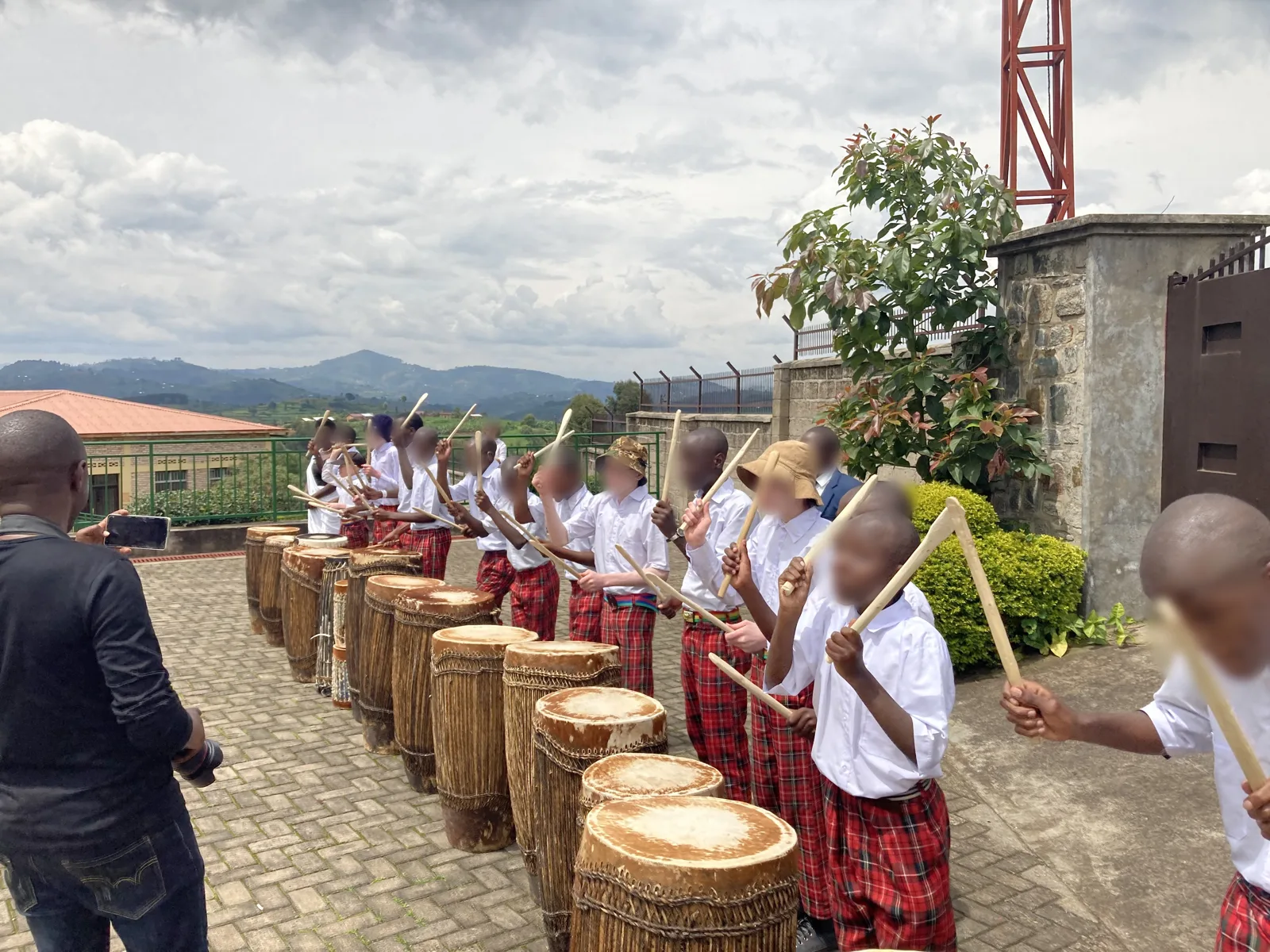
The state catches up
The Polish state arrived only after the sisters. The foreign ministry established the embassy in Kigali in November 2022 and formally opened it in December 2025. Until then, Polish affairs in Rwanda were handled by the missions in Nairobi and Dar es Salaam. Poland also has people here who were educated at Polish universities. Professor Anastase Shyaka, a graduate of the Warsaw University of Technology with a doctorate from the University of Gdańsk, served as Rwanda's ambassador in Warsaw from 2021 to 2026 and, according to Maria Curie-Skłodowska University (UMCS) in Lublin, speaks fluent Polish.
Uzziel Ndagijimana, a former finance minister, graduated from the SGH Warsaw School of Economics and earned his doctorate at the University of Warsaw. Rwanda, whose economy grew by almost 9% a year in 2024 and 2025, therefore knows Poland better than the Polish state's presence would suggest. That reputation was built largely by the nuns.
No longer a Polish mission
The number of Polish sisters is falling, and nowhere is this clearer than in Kibeho. In 2018 four Polish nuns worked at the centre there; by 2024 only two remained, alongside three Rwandan sisters and one from Kenya. In 2023 the Pallottine Sisters in Rwanda were given a province of their own, dedicated to Our Lady of Kibeho, which also covers the DR Congo, Uganda and France. It is led by Sister Angeline Kambugu, and in December 2024 five candidates entered the novitiate in Ruhango. Among those at the Mass celebrating the new province was Sister Rafała Raś, one of the three Pallottines who began the work here in 1977.
This is what a successful mission looks like: the work endures, and local people carry it on.
The Polish sisters are leaving behind schools, clinics and a hospice that will outlast their departure. It is they who are Poland's most enduring outpost in the country.
Sources
This article draws on the websites and publications of the congregations (the Pallottine Sisters, the Sisters of the Angels and the Franciscan Sisters from Laski) and of the Pallottine Mission Secretariat; on reporting by Rzeczpospolita (2011, 2012), Caritas Polska (2019) and Vatican News (2024); on material from the Polish Ministry of Foreign Affairs and Polish Aid, KT Press and UMCS; and on data from Under the Same Sun and the National Institute of Statistics of Rwanda. The findings of the Rwandan commission of 2007 are cited after Rzeczpospolita and the documentation of the CNLG (Rwanda's National Commission for the Fight against Genocide), and the account of Gikondo after Linda Melvern.
We are grateful to Kamil Wojnowski, an intern at the Institute of New Europe, for his editorial comments.